DIY Ceramic Vases
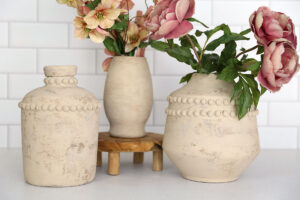
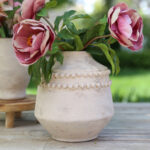
Learn how to turn cheap thrifted vases into beautiful aged ceramic vases that look like they came from Pottery Barn!
Equipment
- Paper Towel, Paper Plate
Ingredients
- Thrifted Vases Glass or Ceramic
- Split Wood Balls 12 mm
- E6000 Glue
- Acrylic Craft Paint in a light linen color and two darker colors
- Chip Paint Brush
- Baking Soda
Instructions
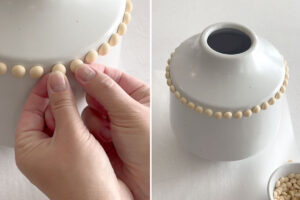
- Use a small amount of E6000 to glue split wood balls in a row around the vase.
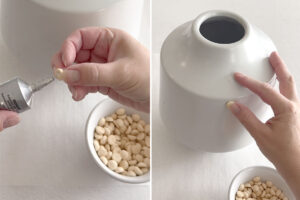
- Leave a little space in between each ball. If the balls start to slide down, just press them back up into place.
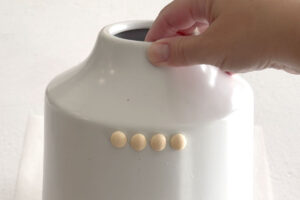
- Continue adding balls until the row goes all the way around the vase. Add a second row if desired. Allow the glue to dry completely, at least two hours.
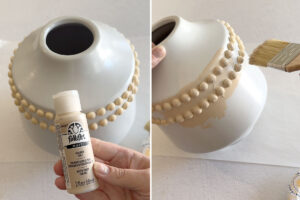
- Paint over the wood balls using the lighter color, making sure to cover where the balls meet the vase.
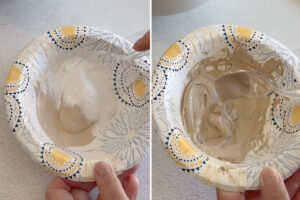
- Mix approximately equal parts of baking soda and the lighter color paint together in a paper bowl on or a paper plate. The consistency should be like grainy pudding.
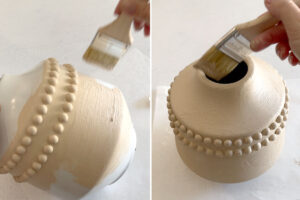
- Brush the baking soda paint onto the vase using side to side strokes (you do not need to go over the balls). Cover the entire outside of the vase, and any inner portion that would be visible at the top. Allow to dry thoroughly before continuing (you can use a hair dryer to speed the drying). If needed, paint on a second coat.
- Put dabs of the darker two paint colors on a paper plate. Bunch up a paper towel and tap it in the paint, then tap it on the paper plate. Then use a bouncing motion on the vase to start transferring splotches of darker paint.
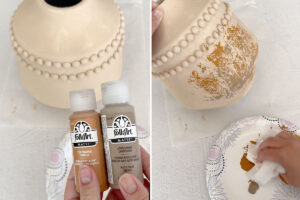
- Continue until the entire vase is covered. Allow it to dry or use a hair dryer to dry it.
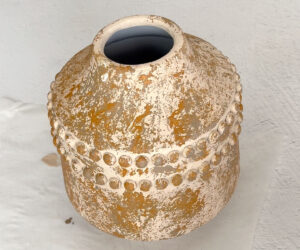
- Finally, apply one more very light coat of the lighter color mixed with baking soda. You can add a bit of water to make the mixture a bit thinner. Get just a little paint on the brush at once and dab it in a few places on the vase, then brush from side to side to spread the paint. The goal is to allow the darker colors to show through, giving the vase an aged ceramic look.
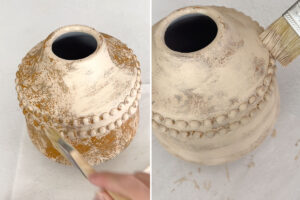
- Allow the vase to dry thoroughly before displaying. Use with faux flowers only; water may damage the finish on the vase.